[Please note that this article was created by ex-Staffer, Chaos.]
I know I certainly do. I have been fascinated with the idea of piloting a robot since the first time I watched a Robotech cartoon, way back when computers were only for nerds and cartoons were only for children. I have been living in a dream world of Japanimation and video games ever since. Here, I want to present a line of reasoning towards building a real mech.
I do not wish to present any wild speculation here, only what I see as present technology and research that can point to the possibility of building a mech of reasonable functionality in the next 10 years or so. This information is by no means complete, or even correct, just correct to the best of my knowledge.
Will Mechs Ever Be Powered by Anything More Than Our Imaginations?
Here I plan to look at some recent advances in generating power, more specifically fusion power.
Bugs in the System
Nanobots will open a whole new arena of manufacturing and design possibilities.
Electric Valium
With the complexities of modern battlefield combat a vehicle that can "think" for itself will take much of the burden of warfare off the shoulders of the pilot. Look here for recent advances in computerized neural emulation, an electronic nervous system, and artificial intelligence.
"Lounge Chair or Nautilus Machine?"
Two design possibilites for accomodating a pilot are presented here, the cockpit and the "wearable" suit.
Learn to Walk Before You Learn to Crawl
Enhanced movement is one of the key reasons for building a mech. This section will present some examples of bipedal robotic movement and balance.
Even Robots Need Exercise
Without the proper motivation, none of these advancements in movement will be realised. Electronic "muscles" are one logical alternative to clunky hydraulics and gears.
Death from Above
Enter the battlefield in 3 dimensions and leave the ground troops in the dust. Evasion, target acquisition, and terrain avoidance are just a few reasons why you would want your mech to "fly". Existing technology, with a few modifications could lift a mechanical monster off the field and into the wild blue 'yonder...
More Stylish than an Armani Suit
Besides maneuverability, armor will be the key to surviving on the battlefield of the future. See some advances that will give you protection and style, without having to bulk up.
Choose Your Weapon
Given that no one is likely to agree to do away with ranged weapons and return to the days of chivalry and melee combat, you'll want to be packing some of this heat.
Will Mechs Ever Be Powered by Anything More Than Our Imaginations?
 Research is well on it's way to being completed on what is known as a "Tokamak" fusion reactor. Researchers in Europe and Japan have proposed a solution to the "fusion" problem, but lack the funding. The problem is, Tokamak reactors are HUGE and extremely expensive.
So, if a mech can't carry a Tokamak reactor around on it's back, then is there any hope at all for realising a fully independent Mech? Possibly. Researchers in Vancouver BC and Japan are working with a subatomic particle called a "Muon" that promises to drastically reduce the scale and temperature of a fusion reaction. Basically, this "Muon" jumps onto the electron orbit of a tritium/deuterium compound and squeezes fusion power out of the nucleus.
A small scale fusion reactor is perhaps one of the biggest obstacles to realising a useful mech. This muon research is the closest thing I have seen that may hold the promise of portable fusion reactors. Lets all cross our fingers and hope it works out.

Bugs in the System
 Nanobots may become commonplace sooner than you think. Ralph C. Merkle and K. Eric Drexler present a convincing case for a nanobot smaller than a common bacteria with multiple tool tips for it's arms, an on-board 8-bit computer, interfacing capability and roughly 100 kilobytes of memory. With the interfacing capabilities, a group of nanobots could team up to accomplish complex tasks that no one 'bot has the processing power to handle. These could conceiveably be programmed to create human - machine nerve interfaces, repair the Mech in the field, scavenge raw materials for those repairs, or even manufacture the entire mech.

Your computer is a good example of nanotechnology already in practice. Your microprocessor was probably produced using a Scanning Tunneling Microscope. This device is used to lay out the patterns and deposit the circuitry one atom at a time.
Starting with one nanobot, it would be possible to create a limitless supply of others, on an exponentially ever growing scale. The same technology could be used to build computers with teraflop processing power on a microminiature scale, opening the possibility for an extremely powerful electronic neural network throughout the mech, with multiple redundancy. Once the nanomanufacturing infrastructure is in place, manufacture of high quality materials and products should be extremely cheap and virtually waste free.
Electric Valium
 How about an electronic Nervous System? Why not? Makes sense that the left leg knows what the right leg is doing. If for some reason you tripped, say on a fallen tree in jungle combat, one leg could react via a "nervous system" of sorts allowing compensation for balance, rather than a face full of mud and the vulnerability of being prone. The article 'The Anthroform Neural Controller: An Architecture for Spinal Circuit Emulation,' points to research completed in 1992 that offers the proof that such technology already exists. As an example of how much work is being done on neural net simulation check out this patent list, as of 1994, showing over 100 patents of various electronic devices mimicing the nervous system/human brain: http://www.ibiblio.org/patents/txt/nnpat.txt
On a related note, scientists at the Department of Energy along with Stanford University have developed "nanowires", wires one nanometer thick capable of extremely high rates of electron transfer with little or no loss of current. This could open up the possibility of massive redundancy in a nervous system network and onboard computer systems, reducing the possibility of electronic failure. This technology can also lead to much smaller, faster computers. Coupled with nanobot technology, extremely dense processors could become the size of a pencil eraser.
 Type Artificial Intelligence into any search engine and you will quickly see that massive amounts of research have gone into this field. There are many uses for AI on the battlefield and in the design of a mech. With so many targets to track, the pilot can quickly become overwhelmed. Solid AI can help determine the most immediate threats and assist in target acquisition and fire control.
A mech could actually learn from the pilot to better enhance the aid that it can give. The AI may learn that its pilot has difficulty in certain terrain and assist in picking a good vantage point. The right weapon for a particular target could be automatically qued up for the pilot, based on information gathered by the AI. It could stay in contact with an orbiting satellite and spot potential ambush spots on the battlefield, or plot several courses to an objective, based on evasive or aggressive need.
Medically, the AI could keep a constant monitor of the pilot. If the pilot is subjected to fatigue, it could introduce specific levels of drugs to enhance performance, in precise dosages so as to avoid overdosage side effects. If the pilot is incapacated, the mech could plot it's way home and leave the field, rather than be destroyed.
It may seem that a pilot wouldn't be needed at all, but there are so many 'human' decisions that need to be made in combat, the trust in an AI will likely never reach that point. Humans will still do the killing for many years to come.
"Lounge Chair or Nautilaus Machine?"
The cockpit and the "suit" design possibilites of a mech both offer a few advantages and disadvantages. Consider first the cockpit. Comfort and extreme protection could be built around the pilot, making extended maneuvers on the battlefield less tiresome and more survivable. On the other hand, the full gamut of controls required to pilot an "agile" mech rather than just a lumbering tank on 2 legs could become staggering. With arms, hands, and legs to manipulate, all while paying attention to various readouts and tactical data, the learning curve on such a machine would be tremendous to say the least.


A suit design, such as the ones you see here, could allow for more natural and agile movement on the field. Though these examples are relatively small, the same principle could be applied to much larger versions. Even with all the movement enhancements this layout provides, combat fatigue will be a more serious factor in this design than with the cockpit.

Learn to Walk Before You Learn to Crawl
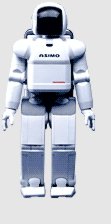 Honda already has a human sized biped that can support itself, walk up/down stairs, and carry things. Dubbed ASIMO (Advanced Step in Innovative Mobility), this guy presents a present day case for a versatile mechanical biped design with balance problems overcome. Their new technology allows ASIMO to more closely mimic human movement, as it anticipates in real time the necessary shift in it's center of gravity as it turns, speeds up/slows down, and encounters a change in elevation. This allows ASIMO to move naturally instead of causing pauses in movement as it encounters new obstacles such as stairs or turns. This is just the tip of the iceberg for this type of technology.
Combined with other technologies presented here, such as carbon fiber muscles, teraflop microprocessors, and an advanced neural network/nervous system, the ability to attain enhanced movement such as dodging, falling prone, getting up from a fall, and just about any other situation you could find yourself in, piloting a mech, the balance and movement question should be easily resolved.
Even Robots Need Exercise
So how will this thing move? Eelectrically stimulated muscles could do the job. This technology basicically consists of mimicing human muscles with materials that lengthen and constrict under an electrical current. Hydraulics would be rather risky in a combat situation. Get a hydraulic actuator blown off your leg and oh well, no dessert for you. But if some strands in a carbon fiber muscle are damaged, the rest of the bundle can help make up the difference. Space Daily has a VERY interesting article on "carbon nanotube artificial muscles". The basic idea involves forming billions of carbon fibers into sheets. Under electrical stimulation, these fibers can perform more mechanical work than their biological counterparts, and even their motor driven equivalents.


Death From Above
 How could a mech fly? Consider the modern hovercraft. 4Wings Hovercraft sells a private hovercraft capable of sustaining a lifted weight of over 6,600 pounds. And this thing only runs off of diesel. Miniturized electric fans in varible duct thrusters similar to the F-22 Raptor, running off a sufficient electrical power source would make a light mech that can fly feasable. The F-22's directional thrust capabilities are pictured at right, with a link to a cool Quicktime video of the engine in action.
More Stylish than an Armani Suit
TG Faust, supplier of fine personal body armor, has a ceramic armor plate that could easily be applied to the protection of a mech. This stuff is light, and if you look it's stopping power, you can easily see that it can perform admirably against conventional ballistic weapons. It has the ability to "defeat" 7.62 mm with ease, and on a power actuated structure such as a mech, could be layered and potentially stop 60mm shells or more.

A design of the automotive industry, i.e. "crumple zones" could further increase the survivability of a mech by "giving in" rather than fighting an impact. This could seriously reduce the knockdown power of a blast.
Against lasers, a mirror coating could block the most serious effects. One problem with a mirror coat is that you basically will be wearing a "shoot me" sign to all kinetic weapons. One solution could be to paint over the mirror surface. As the laser penetrates the paint, it will encounter the reflective surface and bounce harmlessly away. Or, perhaps not so harmless. That beam will go somewhere. It might hit your point man in the back, but hey, better him than you.
Choose Your Weapon
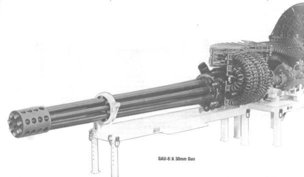 Given a fusion powerplant, railguns and lasers become a serious possibility. I would still consider the laser to be secondary to other weapons choices. It would be very precise most definitely, but proper armor could be instituted to counter the more devastating effects of a laser beam.
I think that ballistic weapons will still rule supreme for a while to come. Considering the devastating power a railgun could introduce to the battlefield, it would seem a more logical choice.
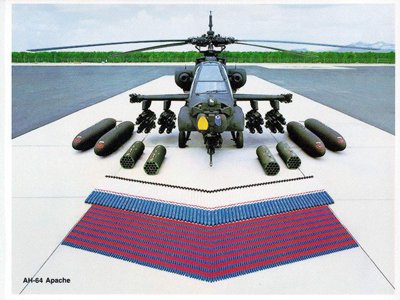
Another devastating weapon already in existence is the 30mm cannon of the A-10 'Warthog" attack plane. It fires depleted uranium shells around a foot long, with a 6,000 shot per minute firing rate. Considering the kickback on this weapon can acutally cause the plane to stall, a scaled down version would be called for on a mech.
Hellfire missiles, bazookas, RPG's, grenade launchers, the possibilities for destruction are near limitless, just the way we like it. Even hand held weapons, modified according to scale, are a distinct possibility.
Rose Colored Glasses
Certainly a lot of different fields of science will have to come together to make mechs happen, but I'm convinced that it is possible, and even probable. Any time a more destructive weapon can be built, the U.S. military is sure to pursue it.
Now, if only Honda would start drawing up plans for the domestic "commuter" version...
Check back in the near future for more information on optical camoflauge, advancements in armor, elaborations on lasers and railguns, advancements in power generation, and more extensive information on artificial intelligence and nanobots. I will also be updating information on man/machine interfaces and many other related subjects in the near future.
I would like to thank Lark, Greywolf, Mhaddy, Skarlot, Brian, Stinger/Deadboy, and Subjanus for all their help in this endeavor.


